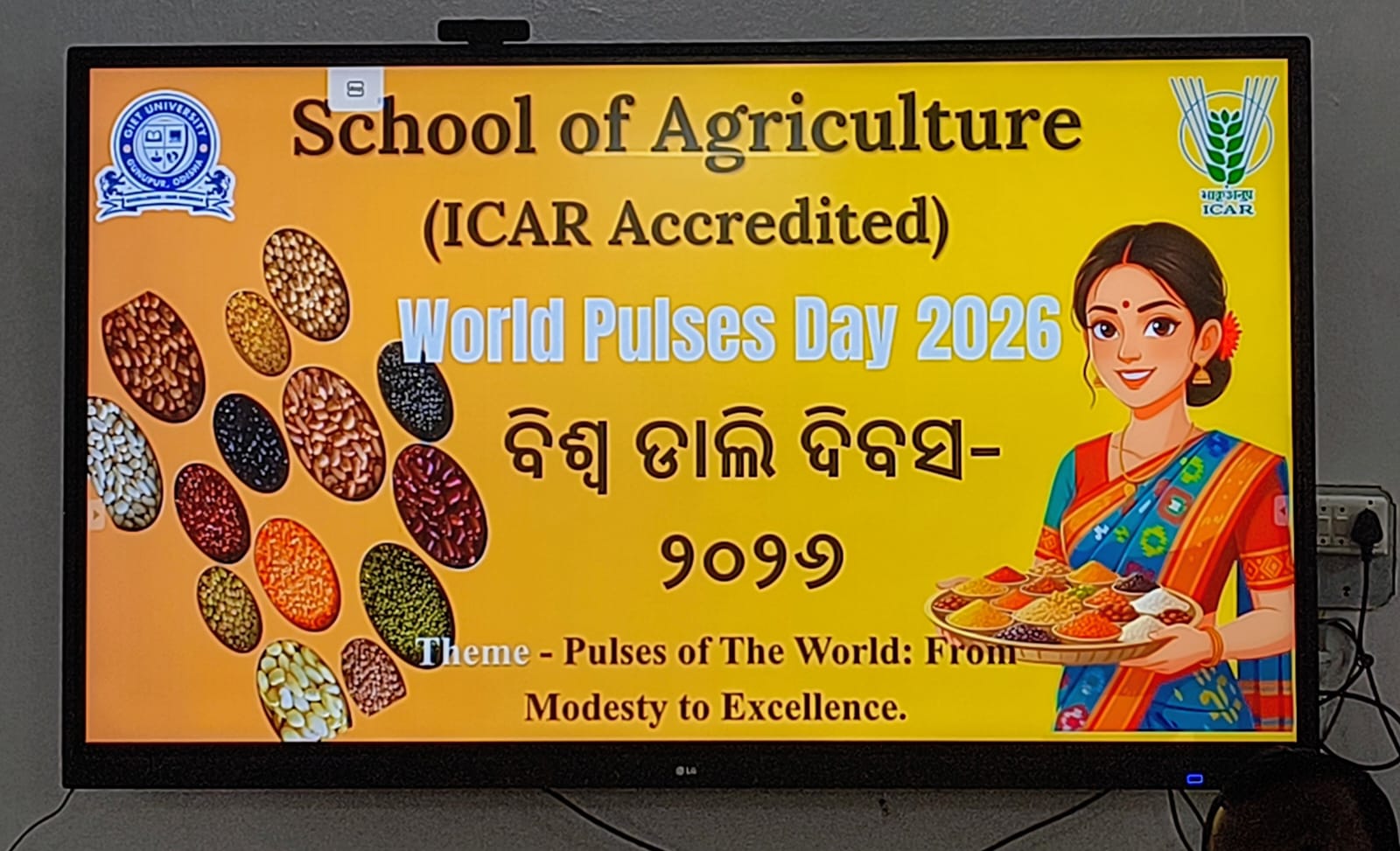
World Pulses Day
Proceedings of the celebration of ‘World Pulses Day’ observed on 10th February, 2026, in the School of Agriculture, GIET University, Gunupur, Rayagada
Theme – Pulses of the World- From Modesty to Excellence.
World Pulses Day was observed on 10th February, 2026 in the Smart Classroom, School of Agriculture, GIET University with the active participation of students and faculties. The inaugural session was graced by Prof. (Dr.) S.K. Mohanty, Dept. of PBG. and Mr. Ashok Kumar Mishra, Associate Dean, School of Agriculture, GIET University.
Mr. S. Satish hosted the event and delivered the welcome address. He highlighted the importance of pulses and explained the observance of World Pulse Day, which began on February 10, 2019. He also emphasized the nutritional value of pulses and the need to include them in the daily diet. Further, he noted that although India produces about 25 million tonnes of pulses, it still imports 4.73 million tonnes, leading the Government of India to launch the Mission for Atmanirbhar Pulses with a target of achieving 30 million tonnes of domestic production by 2027.
Prof. (Dr.) S.K. Mohanty elaborated on the different types of Pulses. He highlighted that incorporating pulses such as green gram, black gram, and pigeonpea into agricultural practices is vital for crop diversification. He emphasised that using these crops in sequential cropping or intercropping systems significantly boosts both productivity and long-term environmental sustainability.
Dr. Sweta Nanda described pulses as “biological powerhouses” that utilise symbiotic Rhizobium bacteria to fix atmospheric nitrogen within root nodules. This natural fertilisation process sustains the plant and leaves behind residual nitrogen that enriches the soil for future crops. She noted, however, while varieties like green gram and pigeonpea are highly efficient, Kidney beans (Rajma) are poor nitrogen fixers and require more external nutrient support.
Mr. Ashok Kumar Mishra emphasized the importance of pulses in our daily food habits and called pulses as a “triple-action powerhouse for sustainability” across economic, nutritional, and environmental fronts. Nutritionally, they’re affordable superfoods with double wheat’s protein and disease-fighting fibers. Environmentally, as “soil engineers,” they fix nitrogen naturally, cutting fertilizer needs and water use. Economically, they lower input costs, boost future yields via enriched soil, and secure farmer livelihoods and planetary health.
Ms. Moirangthem Monalisa Devi proposed a vote of thanks to all concerned dignitaries and participants.