Interdepartmental Seminar
Inter-Departmental Seminar Report for 12.12.25
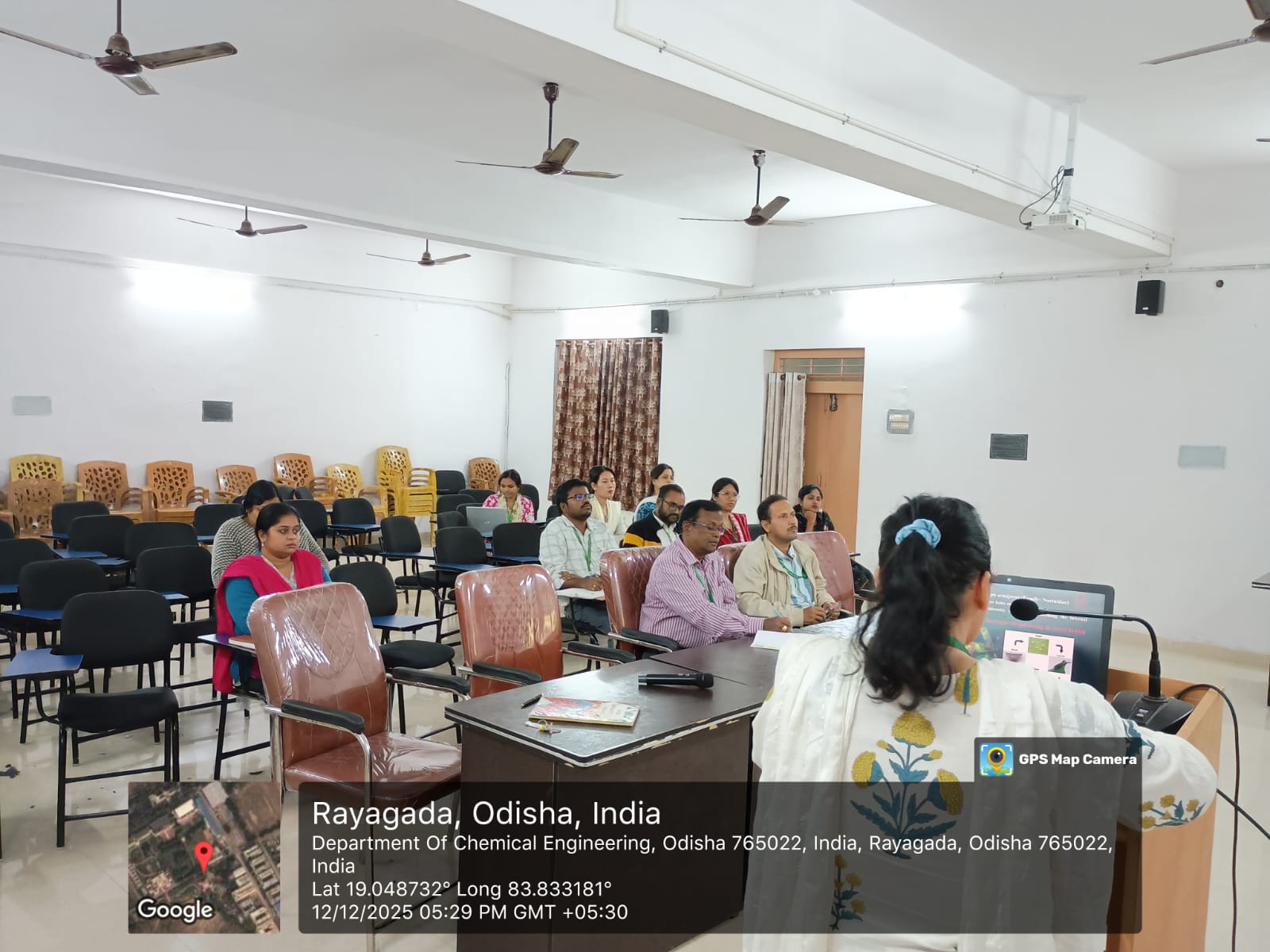
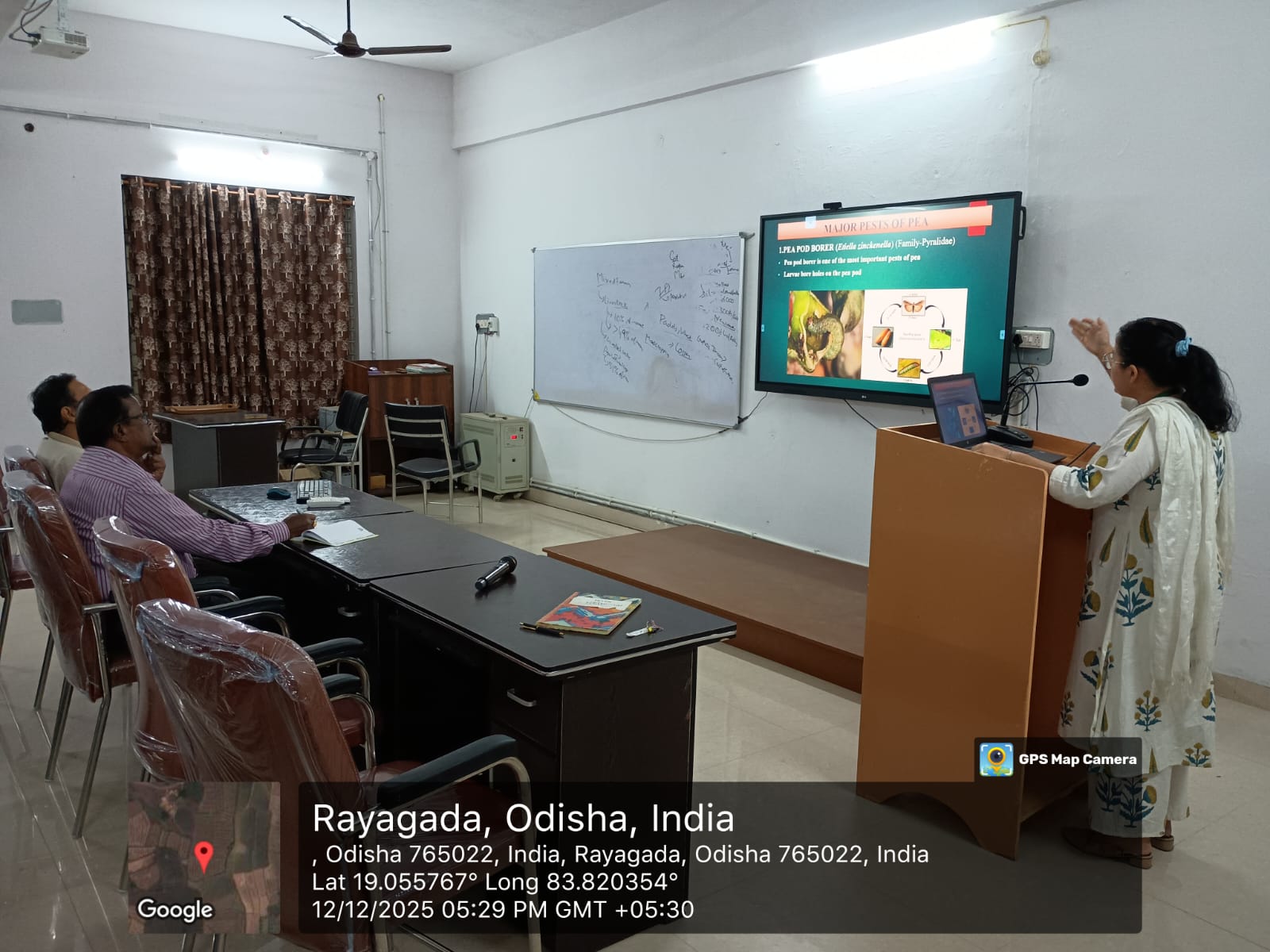
At the beginning of the session, Dr. Kalpataru Nanda, Asst. Prof., Dept. of Genetics and Plant Breeding, addressed the audience and welcomed the faculty members and students to the seminar session. Subsequently, Ms. Moirangthem Monalisa Devi, Asst. Prof., Dept. of Entomology, was invited to deliver her seminar presentation on the topic “Ecofriendly Pest Management Strategies in Pea (Pisum sativum L.)”.
The speaker highlighted that pea productivity is severely constrained by a complex of insect pests, including pea pod borer, pea aphid, pea leaf weevil, pea leaf miner, and pea stem fly, inflicting damage on foliage, stems, pods, and internal tissues, resulting in substantial yield and quality losses. The limitations of conventional chemical insecticides—such as environmental contamination, destruction of natural enemies, pest resistance, and residue problems—were emphasized, underscoring the need for sustainable alternatives.
The core of the presentation focused on the five major components of ecofriendly pest management: botanical pesticides, microbial biopesticides, semiochemicals, insect growth regulators (IGRs), and animal-origin substances. Botanical pesticides derived from plant extracts and essential oils were discussed for their insecticidal and repellent properties, high biodegradability, and safety to beneficial organisms. Microbial biopesticides, including Beauveria bassiana, Metarhizium anisopliae, NPVs, and bacterial agents, were highlighted for their specificity, high virulence, and ecological compatibility. The role of semiochemicals in pest monitoring, mass trapping, and mating disruption was explained, with reference to their successful application in behavior-based management. IGRs such as azadirachtin and pyriproxyfen were described as effective tools that disrupt insect development with minimal non-target effects. Animal-origin compounds like nereistoxin analogues were presented as complementary biorational options with rapid action.
Overall, the seminar emphasized that integrating these ecofriendly approaches provides a sustainable framework for pea pest management, ensuring reduced environmental impact and long-term crop protection. The presentation was well received and appreciated by the audience, followed by an interactive question–answer session. Finally, Dr. Kalpataru Nanda proposed the vote of thanks, and the seminar session concluded successfully.
More Details